
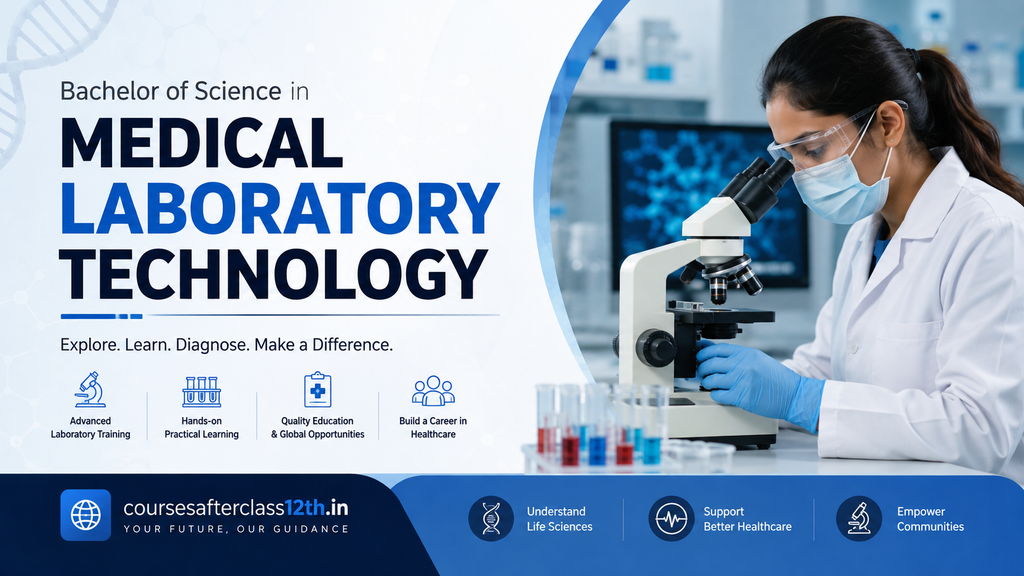
Bachelor of Science in Medical Laboratory Technology is a healthcare programme designed for students who want to build a career in medical laboratories, diagnostic services, hospitals, pathology laboratories, blood banks, research facilities and other healthcare settings. This Bachelor of Science in Medical Laboratory Technology programme combines scientific knowledge with practical laboratory training so that students can understand how biological samples are collected, processed, examined, analysed and reported.
Medical laboratory professionals play an important role in modern healthcare because laboratory investigations support the detection, diagnosis, monitoring and management of many diseases. Doctors frequently use laboratory reports along with clinical history, physical examination and imaging findings to make informed healthcare decisions. As a result, trained laboratory professionals are an important part of the wider healthcare team.
Table of Contents
Curriculum
The B.Sc. MLT curriculum generally introduces students to subjects such as anatomy, physiology, biochemistry, microbiology, pathology, haematology, immunology, clinical laboratory techniques, blood banking, molecular diagnostics, laboratory management and biostatistics. The exact subjects, semester structure, internship requirements and assessment pattern can vary between universities and colleges.
In India, the duration of B.Sc. MLT is not completely uniform across institutions. For example, VMMC & Safdarjung Hospital describes its B.Sc. MLT programme as a three-year programme, whereas the Ministry of Health and Family Welfare’s Model Curriculum Handbook for Medical Laboratory Science recommends a four-year bachelor’s-level programme including six months of internship. Therefore, students should always check the current prospectus and university regulations before applying.
The broader undergraduate education framework also provides flexibility around three-year bachelor’s degrees and four-year bachelor’s degrees, depending on the programme and institutional framework. The University Grants Commission’s National Credit Framework identifies a three-year bachelor’s degree as six semesters and a four-year bachelor’s degree as eight semesters.
For students interested in healthcare but not necessarily in becoming a doctor, B.Sc. MLT can provide a pathway into the diagnostic and laboratory side of healthcare. The course is particularly suitable for students who enjoy biology, chemistry, laboratory work, scientific procedures, technology and detail-oriented tasks.
What is Bachelor of Science in Medical Laboratory Technology?
B.Sc. Medical Laboratory Technology is a science-based allied healthcare programme that prepares students to work with clinical laboratory procedures and diagnostic investigations. Students learn how samples such as blood, urine, stool, sputum, tissue and other biological materials are handled and examined using appropriate laboratory methods.
The course is not limited to learning how to operate laboratory instruments. Students also develop an understanding of biological processes, disease mechanisms, laboratory safety, quality control, sample management, documentation and interpretation of laboratory findings within the professional scope of practice.
A medical laboratory technologist may work in areas such as haematology, clinical biochemistry, microbiology, pathology, immunology, blood banking and molecular diagnostics. Depending on qualification, experience, workplace and applicable regulations, professionals may work in hospitals, diagnostic centres, reference laboratories, research institutions, public health laboratories, biotechnology companies and other healthcare organisations.
The Ministry of Health and Family Welfare’s model curriculum describes medical laboratory professionals as working in clinical laboratories associated with hospitals, reference laboratories, biotechnology laboratories and non-clinical industrial laboratories. It also emphasises competency-based education in which students integrate knowledge, skills and professional attitudes.
Why Choose Bachelor of Science in Medical Laboratory Technology?
Choosing a healthcare course involves more than looking at the course name. Students should consider their interests, aptitude, career goals, practical learning opportunities and the type of work they would like to perform after graduation.
B.Sc. MLT can be a suitable choice for students who are interested in healthcare and laboratory science but prefer a diagnostic, technical and scientific role rather than direct clinical practice as a physician.
Major reasons to consider B.Sc. MLT include:
| Reason | Explanation |
| Healthcare career | Provides a pathway into the diagnostic and laboratory side of healthcare |
| Practical learning | Includes laboratory practicals and, depending on the programme, clinical training or internship |
| Scientific foundation | Covers subjects such as microbiology, biochemistry, pathology and haematology |
| Diagnostic support | Laboratory investigations contribute important information to healthcare professionals |
| Multiple work areas | Graduates may explore hospitals, diagnostic labs, blood banks, research and related sectors |
| Higher-study options | Graduates can consider relevant postgraduate and specialised programmes |
| Technology exposure | Modern laboratories use automated analysers, molecular methods and digital systems |
| Research opportunities | Laboratory science can provide opportunities in research and diagnostic development |
| Skill-oriented education | Practical accuracy, quality control and laboratory procedures are important components |
| Growing healthcare ecosystem | Diagnostic services form an essential part of healthcare delivery |
Students should, however, understand that a degree does not automatically guarantee a particular salary, job title or government position. Employment depends on qualification, institution, practical competence, location, employer, experience, recruitment requirements and applicable professional regulations.
BSc Medical Laboratory Technology Course Highlights
| Particular | Details |
| Course Name | Bachelor of Science in Medical Laboratory Technology |
| Common Short Form | B.Sc. MLT / BSc MLT |
| Course Level | Undergraduate |
| Field | Allied Healthcare / Medical Laboratory Science |
| Typical Entry Qualification | 10+2 or equivalent with relevant science subjects |
| Common Subjects | Physics, Chemistry and Biology/other subjects as specified by the institution |
| Course Duration | Usually 3 or 4 years depending on institution and programme structure |
| Practical Training | Laboratory practicals and, where prescribed, clinical training/internship |
| Core Areas | Haematology, Clinical Biochemistry, Microbiology, Pathology, Immunology, Blood Banking |
| Admission | Merit and/or entrance examination depending on institution |
| Study Mode | Primarily classroom, laboratory and clinical/practical based |
| Career Areas | Hospitals, diagnostic laboratories, blood banks, research and healthcare organisations |
| Higher Education | Relevant M.Sc., postgraduate and specialised programmes |
| Suitable For | Students interested in biology, laboratory science, diagnostics and healthcare technology |
BSc Medical Laboratory Technology Eligibility Criteria
The eligibility criteria for B.Sc. MLT can differ between universities, affiliated colleges and states. Therefore, students should always verify the latest admission notification of the institution they are considering.
A common eligibility pattern is completion of Class 12 or equivalent education with science subjects, particularly Biology and Chemistry. Some institutions may accept Physics, Chemistry and Biology (PCB), while others may have additional subject combinations or minimum percentage requirements.
For example, VMMC & Safdarjung Hospital states eligibility based on 10+2 with PCM or PCB with a minimum percentage, or a relevant vocational stream, along with its specified admission procedure. The Ministry of Health and Family Welfare model curriculum recommends 10+2 with Biology or a vocational course in Medical Laboratory Science/Technology and specifies 50% aggregate in its model entry requirements. These are examples rather than universal rules for every B.Sc. MLT college.
Common Eligibility Requirements
| Eligibility Factor | Typical Requirement |
| Educational Qualification | 10+2 or equivalent |
| Preferred Stream | Science |
| Biology | Commonly required |
| Chemistry | Commonly required |
| Physics | Frequently included |
| Minimum Marks | Institution-specific |
| Entrance Test | May be required |
| Age Requirement | As prescribed by the institution |
| Medical Fitness | May be required by certain institutions |
| Vocational Qualification | Accepted by some institutions |
Students should not assume that the eligibility criteria of one college apply to another. Before submitting an application, check the official admission notification for subjects, percentage, age, entrance examination, reservation requirements and documentation.
BSc Medical Laboratory Technology Admission Process
The admission process for Bachelor of Science in Medical Laboratory Technology varies according to the university and institution. Some colleges may offer admission on the basis of qualifying examination marks, while others may conduct an entrance examination or follow a university/state-level admission process.
The general admission process can be understood through the following steps.
Step 1: Check Eligibility
First, students should verify whether they meet the educational and subject requirements. This usually includes passing Class 12 or an equivalent examination with the subjects specified by the institution.
Step 2: Research Colleges
Students should compare colleges based on university affiliation, recognition, curriculum, laboratory facilities, faculty, clinical exposure, internship structure, hospital tie-ups, student support, fees and placement information.
Step 3: Complete Application
Eligible students need to complete the application form through the college or university’s prescribed admission portal.
Step 4: Entrance Examination, If Applicable
If the institution uses an entrance examination, applicants may need to appear for a test covering subjects such as Biology, Chemistry, Physics or other topics specified by the admission authority.
Step 5: Merit List or Counselling
After examination or evaluation of qualifying marks, eligible students may be shortlisted through a merit list, counselling process or institution-specific selection process.
Step 6: Document Verification
Students generally need academic certificates, identity documents, photographs and other documents required by the institution.
Step 7: Fee Payment and Admission Confirmation
After selection and document verification, the student must pay the applicable admission or tuition fee within the prescribed deadline.
Documents Required for B.Sc. MLT Admission
The exact list varies, but students may commonly be asked for:
| Document | Purpose |
| Class 10 Certificate | Proof of date of birth and academic record |
| Class 12 Mark Sheet | Proof of qualifying examination |
| Class 12 Passing Certificate | Academic qualification |
| Transfer Certificate | Institutional admission requirement |
| Migration Certificate | May be required for students from another board/university |
| Identity Proof | Verification of applicant |
| Passport-size Photographs | Application and institutional records |
| Category Certificate | Applicable where reservation is claimed |
| Domicile Certificate | Required by some state-level admissions |
| Entrance Examination Score | Where applicable |
| Medical Fitness Certificate | If required |
| Gap Certificate | If applicable |
| Other Documents | As specified by the institution |
Students should keep both physical and digital copies of important documents and carefully follow the instructions provided in the admission notification.
BSc Medical Laboratory Technology Course Duration
The duration of B.Sc. MLT depends on the programme structure adopted by the institution.
Some institutions offer a three-year B.Sc. MLT programme. VMMC & Safdarjung Hospital, for example, describes its B.Sc. MLT course as a three-year programme.
The Ministry of Health and Family Welfare’s Model Curriculum Handbook for Medical Laboratory Science recommends a four-year bachelor’s-level programme including a six-month internship for students qualifying as entry-level professionals in laboratory science.
This difference is important for students researching colleges. Instead of assuming that every B.Sc. MLT course has the same duration, students should check:
- Number of semesters
- Total credits
- Practical hours
- Clinical training
- Internship duration
- Internship location
- Examination pattern
- University regulations
- Current admission prospectus
The UGC’s National Credit Framework provides a broader framework in which a bachelor’s degree may be structured over three years or a bachelor’s degree with honours/research may be structured over four years.
BSc Medical Laboratory Technology Syllabus
The B.Sc. MLT syllabus is designed to combine basic medical sciences with specialised laboratory subjects. The curriculum may differ by university, but students commonly encounter subjects related to anatomy, physiology, biochemistry, microbiology, pathology, haematology, immunology, blood banking and laboratory technology.
The Ministry of Health and Family Welfare model curriculum follows a competency-oriented approach and aims to combine theoretical knowledge with practical skills and professional attitudes.
Common B.Sc. MLT subjects
| Subject Area | What Students Learn |
| Anatomy | Structure of the human body |
| Physiology | Functions of organs and body systems |
| Biochemistry | Chemical processes and biochemical investigations |
| Microbiology | Microorganisms and laboratory identification |
| Pathology | Disease processes and pathological examination |
| Haematology | Blood, blood cells and related disorders |
| Immunology | Immune system and immune-related laboratory tests |
| Clinical Biochemistry | Analysis of biochemical parameters |
| Blood Banking | Blood grouping, compatibility and transfusion-related procedures |
| Histopathology | Examination of tissues and pathological changes |
| Cytology | Study of cells and cellular abnormalities |
| Molecular Diagnostics | Molecular techniques used in disease investigation |
| Biostatistics | Statistical concepts used in health and research |
| Laboratory Management | Organisation, documentation and quality systems |
| Medical Ethics | Professional responsibilities and patient-related considerations |
| Laboratory Safety | Safe handling of biological and chemical materials |
BSc Medical Laboratory Technology First-Year Subjects
The first year generally focuses on foundational medical and laboratory sciences. Students may study anatomy, physiology, biochemistry, basic microbiology, communication skills, computer applications or related subjects depending on the curriculum.
The objective is to establish a scientific foundation before students move into more specialised diagnostic laboratory subjects.
Students may learn:
- Human anatomy
- Human physiology
- Biochemistry fundamentals
- Basic microbiology
- Basic pathology
- Introduction to laboratory technology
- Medical terminology
- Biostatistics
- Communication skills
- Computer applications
The first year is important because laboratory procedures cannot be understood effectively without a strong foundation in human biology and basic sciences.
BSc Medical Laboratory Technology Second-Year Subjects
The second year usually introduces more specialised laboratory disciplines. Students may begin working extensively with blood samples, microorganisms, biochemical investigations and pathological specimens.
Common areas include:
- Clinical biochemistry
- Haematology
- Clinical pathology
- Microbiology
- Immunology
- Histopathology
- Cytology
- Blood banking
- Laboratory instrumentation
- Quality control
Practical sessions become increasingly important because students must develop accuracy, discipline and familiarity with laboratory procedures.
B.Sc. MLT Third-Year Subjects
The final stage of the programme generally focuses on advanced laboratory science, diagnostic technologies, laboratory management, clinical exposure and professional preparation.
Depending on the institution, students may encounter:
- Advanced microbiology
- Advanced clinical biochemistry
- Advanced haematology
- Immunodiagnostics
- Molecular diagnostics
- Histopathology
- Blood bank technology
- Laboratory management
- Quality assurance
- Research methodology
- Biostatistics
- Internship or clinical training
- Project work
Students should remember that the exact semester-wise syllabus differs from university to university.
BSc Medical Laboratory Technology Practical Training
Practical training is one of the most important aspects of Medical Laboratory Technology education.
A laboratory professional needs more than theoretical knowledge. Students must understand how laboratory equipment is handled, how specimens are processed, how safety procedures are followed, how errors are reduced and how results are documented.
Practical training may include:
- Sample collection procedures
- Sample identification
- Specimen transportation
- Sample processing
- Blood testing
- Urine examination
- Biochemical testing
- Microbiological procedures
- Haematological investigations
- Tissue processing
- Blood grouping
- Laboratory equipment handling
- Quality control procedures
- Documentation and reporting
- Biosafety practices
The exact procedures students are permitted to perform depend on institutional training, supervision, professional scope and applicable rules.
Importance of Internship in B.Sc. MLT
Internship or clinical training provides an opportunity to connect classroom knowledge with real laboratory environments.
During supervised clinical training, students can become familiar with laboratory workflow, sample handling, equipment, reporting systems, quality-control procedures and professional communication.
An effective internship can help students understand:
- How samples enter a laboratory.
- How specimens are identified and processed.
- How different laboratory departments operate.
- How laboratory information systems may be used.
- How quality-control procedures are implemented.
- How laboratory safety standards are followed.
- How results are documented.
- How laboratory teams coordinate with other healthcare professionals.
The Ministry of Health and Family Welfare model curriculum specifically includes a six-month internship within its recommended four-year bachelor’s-level Medical Laboratory Science programme.
However, students should verify whether their chosen college includes an internship and exactly how long it lasts.
Skills Developed During B.Sc. MLT
A successful Medical Laboratory Technology graduate needs a combination of scientific knowledge, technical competence and professional behaviour.
Important skills include:
| Skill | Importance |
| Laboratory accuracy | Helps reduce procedural and documentation errors |
| Observation | Useful for identifying relevant findings during laboratory work |
| Scientific thinking | Helps students understand laboratory principles |
| Equipment handling | Important for safe and effective use of instruments |
| Sample management | Helps maintain specimen integrity and traceability |
| Quality control | Supports reliable laboratory processes |
| Documentation | Important for accurate records |
| Time management | Laboratories often handle multiple samples and procedures |
| Communication | Supports effective professional coordination |
| Safety awareness | Essential when handling biological and chemical materials |
| Computer skills | Increasingly important in technology-enabled laboratories |
| Teamwork | Laboratory services operate through coordinated teams |
| Ethical conduct | Important when handling confidential health information |
Career Options After B.Sc. MLT
After completing B.Sc. MLT, graduates can explore employment opportunities across diagnostic, hospital, laboratory, research and healthcare-related environments.
Potential roles may include:
- Medical Laboratory Technologist
- Laboratory Technologist
- Laboratory Technician
- Clinical Laboratory Technologist
- Pathology Laboratory Technologist
- Haematology Laboratory Professional
- Clinical Biochemistry Laboratory Professional
- Microbiology Laboratory Professional
- Blood Bank Technologist
- Histopathology Laboratory Professional
- Research Laboratory Assistant
- Molecular Diagnostics Laboratory Professional
- Quality Control Assistant
- Laboratory Operations Assistant
The exact job title and responsibilities depend on the employer, qualification, experience and applicable professional regulations.
Where Can B.Sc. MLT Graduates Work?
Medical Laboratory Technology graduates can potentially work in several healthcare and laboratory environments.
1. Hospitals
Hospitals operate clinical laboratories that support patient diagnosis and monitoring. Large hospitals may have separate departments for biochemistry, microbiology, pathology, haematology, blood banking and other specialised investigations.
2. Diagnostic Laboratories
Private diagnostic centres and reference laboratories conduct a wide range of tests for patients, hospitals and healthcare providers.
3. Blood Banks
Graduates with appropriate training may explore opportunities in blood banking and transfusion-related laboratory services.
4. Pathology Laboratories
Pathology laboratories process specimens and perform investigations related to disease diagnosis.
5. Research Laboratories
Graduates may explore research-oriented roles in universities, healthcare research institutions, biotechnology organisations and pharmaceutical research environments.
6. Public Health Laboratories
Public health laboratories may support disease surveillance, screening, outbreak investigation and population-level health programmes.
7. Biotechnology Sector
Some laboratory science graduates may explore opportunities in biotechnology companies where laboratory procedures, testing and quality systems are important.
8. Pharmaceutical Sector
Pharmaceutical organisations may have laboratory and quality-control functions where relevant scientific qualifications and skills are required.
B.Sc. MLT Career Specialisations
Medical Laboratory Technology includes multiple laboratory disciplines, allowing graduates to develop an interest in specific areas.
Haematology
Haematology focuses on blood and blood-forming tissues. Students learn about blood cells, blood-related disorders and laboratory investigations.
Clinical Biochemistry
Clinical biochemistry involves laboratory analysis of biochemical substances in biological specimens. Tests in this area can support the evaluation of metabolic and organ-related conditions.
Microbiology
Medical microbiology involves the study and laboratory identification of microorganisms associated with disease, including bacteria, fungi, parasites and viruses.
Histopathology
Histopathology involves laboratory examination of tissue specimens to identify pathological changes.
Cytology
Cytology focuses on cells and their morphological characteristics. It can contribute to screening and diagnostic processes.
Immunology
Immunology involves the immune system and laboratory investigations related to immune responses and disorders.
Blood Banking
Blood bank laboratory services include processes such as blood grouping, compatibility testing and other transfusion-related laboratory procedures.
Molecular Diagnostics
Molecular diagnostics uses molecular-level techniques to investigate biological markers associated with disease. This is an increasingly technology-oriented area of laboratory science.
B.Sc. MLT Salary in India
Salary is one of the most frequently searched questions by students considering B.Sc. MLT. However, there is no single salary applicable to every graduate.
A graduate’s compensation can vary according to:
- Employer
- City
- Type of laboratory
- Hospital or diagnostic organisation
- Job role
- Qualification
- Practical skills
- Internship experience
- Additional certifications
- Years of experience
- Shift requirements
- Specialisation
- Government or private employment
Fresh graduates generally begin at entry-level positions, while professionals with experience and specialised technical skills may progress into senior technical, supervisory, quality-control or laboratory-management positions.
Instead of choosing a college solely because it advertises a high salary package, students should examine placement records, the number of students placed, job roles, median or average outcomes where available, employer quality and branch-specific opportunities.
Factors affecting B.Sc. MLT salary
| Factor | Possible Impact |
| Experience | Generally increases opportunities for higher-level positions |
| Specialisation | Technical specialisation may open additional career paths |
| Location | Salaries can differ between cities and regions |
| Employer | Large hospitals and specialised laboratories may have different pay structures |
| Skills | Strong technical and laboratory skills can improve employability |
| Qualification | Higher qualifications can support progression |
| Job Role | Supervisory and specialised positions may have different compensation |
| Sector | Government, private, research and corporate roles can follow different salary structures |
For an education website, it is safer to avoid promising a fixed salary. Actual compensation should be checked through current employer vacancies and verified placement information.
Higher Studies After B.Sc. MLT
Students who want to continue their education can explore postgraduate and specialised programmes related to laboratory science and allied healthcare.
Potential options may include:
- M.Sc. Medical Laboratory Technology
- M.Sc. Medical Laboratory Science
- M.Sc. Microbiology
- M.Sc. Biochemistry
- M.Sc. Biotechnology
- M.Sc. Clinical Biochemistry
- M.Sc. Haematology
- M.Sc. Molecular Biology
- M.Sc. related life-science disciplines
- Postgraduate diplomas in relevant specialisations
- Research-oriented programmes
Eligibility for postgraduate courses varies considerably. A student should check whether the specific master’s programme accepts B.Sc. MLT graduates and whether any subject-specific requirements apply.
B.Sc. MLT vs DMLT
B.Sc. MLT and DMLT are related but different qualifications.
| Feature | B.Sc. MLT | DMLT |
| Full Form | Bachelor of Science in Medical Laboratory Technology | Diploma in Medical Laboratory Technology |
| Level | Undergraduate degree | Diploma |
| Duration | Institution-dependent; commonly 3 or 4 years | Generally shorter |
| Academic Depth | Broader undergraduate education | More focused diploma-level training |
| Career Entry | Laboratory and allied healthcare roles | Entry-level laboratory roles |
| Higher Education | Wider postgraduate pathways | May require additional qualification for some higher-study routes |
| Training | Theory + practical + possible clinical internship | Theory + practical training |
| Best For | Students seeking a bachelor’s degree | Students seeking diploma-level laboratory training |
The choice depends on the student’s academic goals, time, finances and desired career pathway.
B.Sc. MLT vs B.Sc. Nursing
These programmes belong to the healthcare sector but prepare students for different professional roles.
| Feature | B.Sc. MLT | B.Sc. Nursing |
| Primary Area | Medical laboratory science | Nursing and patient care |
| Main Work Environment | Laboratories, diagnostic departments | Hospitals, clinics and healthcare settings |
| Patient Interaction | Generally limited compared with nursing | Extensive |
| Core Subjects | Pathology, microbiology, biochemistry, haematology | Nursing, anatomy, physiology, pharmacology, patient care |
| Practical Focus | Laboratory investigations | Direct patient care |
| Suitable For | Students interested in laboratory science | Students interested in patient care |
Students should select the programme according to the type of healthcare work they actually want to perform.
B.Sc. MLT vs MBBS
B.Sc. MLT and MBBS are fundamentally different programmes.
MBBS prepares students for the medical profession and clinical practice subject to applicable licensing and regulatory requirements. B.Sc. MLT prepares students for medical laboratory science and allied healthcare roles.
A student interested in laboratory investigations, diagnostic technology, scientific procedures and laboratory operations may find B.Sc. MLT more aligned with their interests.
A student whose goal is to become a medical doctor should research the MBBS pathway and its admission requirements separately.
Advantages of B.Sc. MLT
B.Sc. MLT offers several potential advantages for students interested in laboratory-based healthcare careers.
Scientific Education
Students develop knowledge across multiple areas of biological and medical science.
Practical Exposure
Laboratory sessions allow students to apply theoretical concepts.
Healthcare Relevance
Laboratory testing is an important part of modern healthcare delivery.
Multiple Specialisations
Students can develop interests in areas such as microbiology, haematology, pathology, biochemistry and molecular diagnostics.
Research Opportunities
Laboratory science can provide a foundation for research-oriented careers and higher education.
Technology Exposure
Modern laboratories increasingly rely on automation, information systems and advanced diagnostic methods.
Career Flexibility
Graduates can explore different employers and laboratory environments depending on qualification and applicable requirements.
Challenges of B.Sc. MLT
Students should also understand the practical demands of the profession before choosing the course.
Medical laboratory work requires precision. A small procedural or documentation error can affect laboratory workflow and may have implications for clinical decision-making. Therefore, students must take laboratory safety, quality control and accuracy seriously.
Other challenges can include:
- Working with biological specimens
- Following strict safety procedures
- Maintaining concentration for repetitive procedures
- Working in shifts in some healthcare environments
- Handling laboratory equipment carefully
- Maintaining accurate documentation
- Meeting quality-control standards
- Working under time pressure
- Continuing to update technical knowledge
Students who enjoy scientific procedures, structured work and detail-oriented environments may find these aspects suitable.
Role of Technology in Medical Laboratory Technology
Technology has significantly changed modern diagnostic laboratories.
Traditional manual procedures continue to have importance, but many laboratories now use automated analysers, digital reporting systems, laboratory information systems, molecular diagnostic platforms and other technologies.
B.Sc. MLT students should therefore develop both scientific fundamentals and technological awareness.
Emerging areas include:
- Laboratory automation
- Molecular diagnostics
- Digital pathology
- Laboratory information systems
- Automated haematology analysers
- Automated biochemistry analysers
- Immunoassay systems
- Point-of-care testing
- Artificial intelligence-assisted laboratory workflows
- Advanced quality-control systems
Technology does not eliminate the importance of trained professionals. Instead, laboratory professionals increasingly need to understand how instruments, software, quality systems and human decision-making work together.
Importance of Quality Control in Medical Laboratories
Quality control is fundamental to laboratory science.
A laboratory result is useful only when the testing process is performed under appropriate conditions. Quality management therefore covers multiple stages, including sample collection, identification, processing, analysis, documentation and reporting.
Students may learn about:
- Internal quality control
- Quality assurance
- Calibration
- Equipment maintenance
- Standard operating procedures
- Documentation
- Error identification
- Corrective action
- Laboratory safety
- Process monitoring
Quality-oriented thinking is an important professional skill for laboratory graduates.
Medical Laboratory Technology and Patient Care
Although medical laboratory professionals may not spend as much time directly with patients as nurses or physicians, their work can still contribute significantly to patient care.
Laboratory investigations can provide information used by doctors and other healthcare professionals to evaluate health conditions, monitor treatment and make clinical decisions.
For this reason, laboratory professionals need to understand that their responsibilities extend beyond simply operating machines. Sample identification, correct procedure, quality control, confidentiality, documentation and timely reporting are all important aspects of professional laboratory practice.
B.Sc. MLT and Research
Students interested in research can use their laboratory education as a foundation for further academic development.
Research environments may involve:
- Disease studies
- Microbiology
- Molecular biology
- Biotechnology
- Clinical research
- Diagnostic technology
- Public health
- Laboratory methods
- Biomedical research
Students interested in research should develop skills in scientific literature reading, laboratory methodology, data collection, statistics, research ethics and scientific communication.
Is B.Sc. MLT a Good Course After 12th?
B.Sc. MLT can be a good option after Class 12 for students who are interested in healthcare but prefer laboratory science, diagnostics and technical work.
It can be particularly appropriate for students who:
- Enjoy Biology
- Like laboratory experiments
- Have an interest in healthcare
- Prefer scientific and technical work
- Pay attention to detail
- Are comfortable following procedures
- Want to work in diagnostic environments
- Are interested in medical technology
- Want to explore laboratory-based careers
However, students should not select B.Sc. MLT simply because it is a healthcare course. They should first understand the actual work performed by laboratory professionals and compare the programme with alternatives such as nursing, pharmacy, physiotherapy, radiology and other allied healthcare programmes.
Who Should Choose B.Sc. MLT?
B.Sc. MLT may suit students who demonstrate an interest in science and laboratory work.
Ideal qualities include:
Interest in Biology:
Understanding human biology is important for laboratory science.
Attention to Detail:
Laboratory work requires careful observation and accurate documentation.
Patience:
Some laboratory procedures require repetitive or time-sensitive work.
Technical Interest:
Students should be willing to learn laboratory equipment and technology.
Responsible Behaviour:
Laboratory safety and sample management require discipline.
Analytical Thinking:
Students need to understand scientific processes and laboratory findings.
Teamwork:
Laboratory departments often work alongside doctors, nurses and other healthcare professionals.
Who Should Avoid Choosing B.Sc. MLT?
B.Sc. MLT may not be the best fit for students who strongly dislike laboratory work, biological specimens, scientific procedures or detail-oriented tasks.
Students who want extensive direct patient interaction may prefer programmes such as nursing or physiotherapy.
Likewise, students whose primary ambition is to become a doctor should explore the medical education pathway rather than choosing B.Sc. MLT as a substitute.
The best course is the one that matches the student’s interests, abilities and long-term career goals.
How to Choose the Best B.Sc. MLT College
Choosing a college is an important decision because the quality of practical education can influence a student’s learning experience.
Students should evaluate the following factors.
| Factor | What to Check |
| University Affiliation | Verify the affiliating university and programme status |
| Recognition | Check applicable recognition and regulatory requirements |
| Laboratory Facilities | Assess equipment, infrastructure and practical facilities |
| Hospital Tie-Up | Check clinical exposure opportunities |
| Internship | Verify duration, location and structure |
| Faculty | Review qualifications and teaching experience |
| Curriculum | Compare subjects and practical components |
| Student Intake | Consider whether practical facilities are adequate |
| Placement | Check actual placement data rather than only promotional claims |
| Fees | Compare total course cost |
| Location | Consider accommodation and travel |
| Reviews | Look for credible student feedback |
| Accreditation | Check applicable institutional accreditation |
| Career Support | Review internship and placement assistance |
Students should preferably visit the institution, inspect laboratory facilities and ask specific questions before admission.
B.Sc. MLT Fees
The total cost of B.Sc. MLT varies significantly between institutions.
Fees may depend on:
- Government or private institution
- University
- Location
- Infrastructure
- Laboratory facilities
- Hostel requirements
- Practical charges
- Examination fees
- Registration charges
- Internship arrangements
Therefore, a single national B.Sc. MLT fee figure can be misleading.
Expenses students should consider
| Expense | Possible Cost Component |
| Tuition Fee | Main academic fee |
| Admission Fee | One-time or initial charge |
| Laboratory Fee | Practical training expenses |
| Examination Fee | Semester/yearly examination |
| Registration Fee | University or institutional registration |
| Hostel | If accommodation is required |
| Transport | Daily commuting |
| Books | Academic resources |
| Uniform | Where applicable |
| Equipment | Laboratory-related educational items |
| Internship Expenses | Travel or accommodation depending on location |
Students should compare the total cost of education, not only the advertised tuition fee.
Government vs Private B.Sc. MLT Colleges
Government and private institutions can differ in fees, admission processes, infrastructure, intake and available resources.
| Feature | Government Institution | Private Institution |
| Fees | Often comparatively lower, but varies | Often higher, but varies |
| Admission | May involve merit or entrance criteria | Institution-specific |
| Competition | Can be high | Varies |
| Infrastructure | Varies by institution | Varies significantly |
| Clinical Exposure | Depends on hospital linkage | Depends on hospital linkage |
| Hostel | Institution-specific | Institution-specific |
| Placements | Must be evaluated institution-wise | Must be evaluated institution-wise |
The best choice is not determined only by whether an institution is government or private. Students should evaluate the actual programme quality and practical exposure.
Scope of B.Sc. MLT in India
The scope of Medical Laboratory Technology is connected with the wider healthcare and diagnostic ecosystem.
Healthcare providers depend on laboratory services for a wide range of investigations. As diagnostic technology develops, laboratory services are also becoming more specialised and technology-driven.
Graduates can potentially develop careers in:
- Hospital laboratories
- Diagnostic chains
- Pathology laboratories
- Blood banks
- Public health laboratories
- Research institutions
- Biotechnology organisations
- Pharmaceutical laboratories
- Clinical research environments
- Molecular diagnostic laboratories
- Quality-control departments
Career progression can improve with experience, additional qualifications and specialised technical skills.
Scope of B.Sc. MLT Abroad
Medical Laboratory Science is also an international healthcare field, but students should not assume that an Indian B.Sc. MLT degree automatically permits professional practice in another country.
Different countries may have their own:
- Qualification requirements
- Professional registration
- Licensing examinations
- Credential assessment
- English-language requirements
- Work experience requirements
- Scope-of-practice rules
Therefore, students planning an international career should research the regulatory authority and registration requirements of the target country before choosing the course or planning employment.
B.Sc. MLT Government Jobs
Graduates may explore government-sector opportunities where their qualification is accepted for the advertised post.
Potential work environments may include:
- Government hospitals
- Public health laboratories
- Government medical colleges
- Research institutions
- Health departments
- Blood banks
- Diagnostic laboratories
- Public-sector healthcare organisations
Government recruitment is vacancy-based. Eligibility, age limits, reservation, examination requirements, registration requirements and salary structure vary by recruitment notification.
Students should always read the official recruitment advertisement rather than relying on generic online claims.
B.Sc. MLT Private Jobs
Private-sector opportunities may be available in:
- Hospitals
- Diagnostic centres
- Pathology laboratories
- Blood banks
- Research organisations
- Biotechnology companies
- Pharmaceutical organisations
- Clinical research organisations
- Medical testing facilities
Fresh graduates may initially enter technical or junior positions and later move into specialised or supervisory roles as they gain experience.
Career Growth After B.Sc. MLT
A typical career progression may develop from entry-level technical work towards specialised, supervisory and management responsibilities.
An illustrative progression could be:
B.Sc. MLT Graduate → Entry-Level Laboratory Role → Experienced Technologist → Senior Technologist → Supervisor → Laboratory Manager
The actual career path depends on employer structure, professional qualification, experience and applicable regulations.
Additional education can also create alternative pathways into research, teaching, management or specialised laboratory disciplines.
B.Sc. MLT Entrance Exams
There is no single universal entrance examination used by every B.Sc. MLT institution in India.
Depending on the institution, admission may be based on:
- Class 12 merit
- University entrance examination
- State-level admission process
- Institutional entrance examination
- Counselling
- Combination of merit and entrance criteria
Students should check the official admission notification of the college or university they wish to join.
Preparation Tips for B.Sc. MLT Admission
Students preparing for admission should strengthen their understanding of Class 11 and Class 12 science subjects, particularly Biology and Chemistry where these are part of the admission requirements.
Useful preparation strategies include:
- Revise basic Biology concepts.
- Strengthen Chemistry fundamentals.
- Review Physics if included in the admission test.
- Practise objective questions.
- Read the official entrance syllabus.
- Follow previous question papers where available.
- Maintain a realistic study schedule.
- Track application deadlines.
- Keep admission documents ready.
- Verify eligibility before applying.
B.Sc. MLT Important Subjects to Study Before College
Students can make the first year easier by developing a strong understanding of:
- Cell biology
- Human anatomy
- Human physiology
- Basic genetics
- Basic microbiology
- Organic chemistry fundamentals
- Biochemistry fundamentals
- Scientific terminology
- Basic mathematics and statistics
Students do not need to know advanced laboratory procedures before joining the course. The purpose of the degree is to provide structured education and supervised practical training.
Future of Medical Laboratory Technology
The future of Medical Laboratory Technology is increasingly connected with automation, molecular testing, digital systems, quality management and advanced diagnostic technologies.
Modern laboratories are becoming more integrated and data-driven. Automated instruments can process large numbers of samples, while molecular techniques can provide highly specific information in selected diagnostic contexts.
At the same time, professional laboratory staff remain important because technology requires trained people for:
- Sample management
- Instrument operation
- Quality control
- Troubleshooting
- Result verification within professional scope
- Documentation
- Laboratory workflow
- Safety
- Communication
- Equipment maintenance coordination
Students entering the field should therefore aim to become comfortable with both traditional laboratory fundamentals and emerging technologies.
Artificial Intelligence and Medical Laboratory Technology
Artificial intelligence and automation are becoming relevant to healthcare and laboratory workflows.
AI-enabled systems may assist with tasks such as image analysis, pattern recognition, workflow optimisation and data management. However, technology should be understood as a tool rather than a replacement for professional responsibility.
Future laboratory professionals may benefit from learning:
- Digital laboratory systems
- Data interpretation
- Basic statistics
- Quality management
- Instrument automation
- Molecular diagnostics
- Digital pathology concepts
- Information technology
- AI-assisted laboratory applications
The strongest professionals are likely to be those who combine scientific fundamentals with technological adaptability.
B.Sc. MLT and Laboratory Safety
Laboratory safety is a core professional responsibility.
Students may work with biological specimens, chemicals, sharps and laboratory instruments. Therefore, appropriate personal protective equipment, specimen handling, waste management, infection-control procedures and emergency protocols are essential.
Important safety principles include:
- Wearing appropriate protective equipment
- Correct specimen identification
- Following standard operating procedures
- Proper disposal of laboratory waste
- Safe handling of sharps
- Avoiding unnecessary exposure
- Maintaining clean work areas
- Reporting accidents and incidents
- Following institutional biosafety procedures
Safety should never be treated as an optional part of laboratory training.
B.Sc. MLT and Professional Ethics
Medical laboratory professionals may handle sensitive patient information and biological samples. Professional ethics therefore form an important part of healthcare laboratory practice.
Students should understand the importance of:
- Patient confidentiality
- Accurate documentation
- Honest reporting
- Professional responsibility
- Respect for patients
- Appropriate use of laboratory resources
- Compliance with institutional protocols
- Maintaining professional competence
Ethical laboratory practice supports trust in healthcare systems.
B.Sc. MLT Research Project
Some B.Sc. MLT programmes include project work or research-oriented assignments.
A project can help students learn how to:
- Select a research topic.
- Review scientific literature.
- Develop a research question.
- Collect information or laboratory data.
- Follow an appropriate methodology.
- Analyse data.
- Present findings.
- Prepare a scientific report.
Students interested in postgraduate education should take project work seriously because it can strengthen scientific writing and research skills.
B.Sc. MLT Career in Diagnostic Laboratories
Diagnostic laboratories remain one of the most visible employment environments for medical laboratory professionals.
A large diagnostic laboratory may have multiple sections, such as:
- Clinical biochemistry
- Haematology
- Microbiology
- Histopathology
- Immunology
- Molecular diagnostics
- Sample collection
- Quality control
This departmental structure can allow experienced professionals to develop specialised expertise.
B.Sc. MLT Career in Hospitals
Hospitals often maintain laboratories that support inpatient and outpatient services.
Working in a hospital laboratory can expose graduates to:
- Routine diagnostic investigations
- Emergency laboratory requests
- Sample processing
- Interdepartmental coordination
- Quality-control procedures
- Laboratory information systems
- Blood bank services
- Specialised diagnostic departments
The exact responsibilities depend on the job position and employer.
B.Sc. MLT Career in Blood Banks
Blood banking is an important laboratory area involving procedures associated with blood and transfusion services.
Students interested in this field can develop knowledge related to:
- Blood grouping
- Compatibility testing
- Blood component handling
- Storage procedures
- Documentation
- Transfusion-related laboratory processes
- Quality and safety procedures
Specific responsibilities depend on professional qualification, institutional training and applicable regulations.
B.Sc. MLT Career in Microbiology
Microbiology can be an attractive specialisation for students interested in microorganisms and infectious diseases.
Laboratory microbiology may involve examination and identification of microorganisms and laboratory methods used to support diagnosis.
Students interested in this area should develop strong knowledge of:
- Microbial biology
- Culture techniques
- Staining methods
- Identification methods
- Laboratory safety
- Infection-control concepts
- Antimicrobial susceptibility testing principles
B.Sc. MLT Career in Clinical Biochemistry
Clinical biochemistry is another important laboratory discipline.
It involves analysis of biochemical parameters in biological samples and contributes to the evaluation of various physiological and pathological conditions.
Students interested in clinical biochemistry should develop a strong foundation in:
- Biochemistry
- Metabolism
- Enzymology
- Clinical chemistry
- Laboratory instrumentation
- Quality control
- Analytical techniques
B.Sc. MLT Career in Haematology
Haematology focuses on blood and related laboratory investigations.
Students can develop knowledge of:
- Blood cells
- Haemoglobin
- Blood cell counts
- Blood morphology
- Coagulation
- Bone marrow-related investigations
- Haematological disorders
This field requires strong observation and laboratory accuracy.
B.Sc. MLT Career in Histopathology
Histopathology involves examination of tissue specimens.
Students may learn about:
- Tissue processing
- Fixation
- Embedding
- Sectioning
- Staining
- Microscopy
- Histological techniques
This specialisation may appeal to students who enjoy microscopy and tissue-level investigation.
B.Sc. MLT Career in Molecular Diagnostics
Molecular diagnostics represents a more technology-oriented area of laboratory medicine.
It can involve techniques used to detect or analyse nucleic acids and other molecular markers.
Students interested in molecular diagnostics should consider developing additional knowledge of:
- Molecular biology
- Genetics
- DNA and RNA
- PCR concepts
- Molecular assay principles
- Laboratory quality control
- Data interpretation
Postgraduate education or specialised training may be useful for advanced roles.
Is B.Sc. MLT Difficult?
B.Sc. MLT can be academically demanding because it combines medical sciences with laboratory procedures.
Students may need to study several science-heavy subjects simultaneously while also developing practical skills.
The course becomes more manageable when students:
- Attend practical classes regularly
- Revise concepts consistently
- Maintain laboratory records carefully
- Practise scientific terminology
- Understand concepts instead of memorising everything
- Ask questions during practical sessions
- Revise before examinations
- Develop good time-management habits
Students with a genuine interest in Biology and laboratory science can generally build the required knowledge through consistent study.
How to Succeed in B.Sc. MLT
Academic success is only one part of professional preparation.
Students should also:
Develop Practical Skills
Do not treat laboratory practicals as secondary to theory.
Learn Laboratory Safety
Understand why each safety procedure exists.
Improve Computer Skills
Digital systems are increasingly important in laboratories.
Practise Documentation
Accurate records are essential in laboratory environments.
Build Communication Skills
Healthcare is a team environment.
Develop Research Skills
Learn how to read scientific papers and understand basic research methods.
Follow New Technology
Stay aware of developments in molecular diagnostics, automation and laboratory information systems.
Build Professional Discipline
Punctuality, accuracy and responsible behaviour are important in healthcare environments.
B.Sc. MLT Admission Checklist
Before applying, students can use this checklist:
| Question | Check |
| Is the college affiliated with a recognised university? | Yes/No |
| What is the exact course duration? | Verify |
| What subjects are required in Class 12? | Verify |
| What is the minimum percentage? | Verify |
| Is an entrance test required? | Verify |
| What is the total fee? | Verify |
| Is there a hospital tie-up? | Verify |
| Is internship included? | Verify |
| How long is the internship? | Verify |
| Are laboratories adequately equipped? | Verify |
| What is the placement record? | Verify |
| What postgraduate options are available? | Verify |
| Is hostel accommodation available? | Verify |
| What is the refund policy? | Verify |
Top Questions Students Should Ask a B.Sc. MLT College
Before paying admission fees, students can ask the college:
- What is the exact duration of the programme?
- Which university awards the degree?
- What is the current affiliation status?
- What laboratory facilities are available?
- How many practical hours are included?
- Is clinical training provided?
- Is internship compulsory?
- Where are students sent for internship?
- Which subjects are taught in each semester?
- What is the total fee for the entire programme?
- Are hostel and transport facilities available?
- What are the actual placement outcomes?
- Which employers recruit graduates?
- Can students pursue postgraduate studies after graduation?
- What are the current admission requirements?
These questions can help students make a more informed decision.
B.Sc. MLT: Key Advantages and Limitations
| Advantages | Limitations/Considerations |
| Healthcare-related career | Laboratory work may not suit everyone |
| Scientific education | Requires strong science fundamentals |
| Practical training | Practical accuracy is essential |
| Multiple laboratory disciplines | Some roles may involve shift work |
| Research opportunities | Higher positions may require experience or further study |
| Diagnostic-sector opportunities | Salary varies significantly by employer |
| Technology exposure | Professionals need continuous learning |
| Higher-study options | Eligibility varies by postgraduate programme |
B.Sc. MLT: Career Roadmap
A student can consider the following broad career roadmap:
Class 12 Science
↓
B.Sc. Medical Laboratory Technology
↓
Laboratory Practical Training / Internship
↓
Entry-Level Laboratory Position
↓
Technical Specialisation
↓
Senior Technologist / Specialist Role
↓
Supervisory / Quality / Management Role
Alternatively:
B.Sc. MLT
↓
M.Sc. / Postgraduate Specialisation
↓
Research / Teaching / Specialised Laboratory Career
The exact route will depend on professional requirements and the individual’s career goals.
Frequently Asked Questions About B.Sc. MLT
What is B.Sc. MLT?
B.Sc. MLT stands for Bachelor of Science in Medical Laboratory Technology. It is an undergraduate allied healthcare programme that focuses on medical laboratory science, diagnostic testing, laboratory procedures, safety, quality control and related scientific subjects.
What is the duration of B.Sc. MLT?
The duration varies by institution. Some institutions offer a three-year B.Sc. MLT, while the Ministry of Health and Family Welfare’s model curriculum recommends a four-year bachelor’s-level Medical Laboratory Science programme including six months of internship. Students should check the current programme structure of their chosen college.
Can I pursue B.Sc. MLT after 12th?
Yes. B.Sc. MLT is an undergraduate programme and is commonly offered to students who have completed 10+2 with the science subjects specified by the institution.
Is Biology compulsory for B.Sc. MLT?
Biology is commonly required, but the exact subject combination varies between institutions. Some institutions may permit specific alternative combinations. Students should check the official eligibility criteria before applying.
What subjects are taught in B.Sc. MLT?
Common subjects include anatomy, physiology, biochemistry, microbiology, pathology, haematology, immunology, blood banking, histopathology, clinical laboratory techniques, molecular diagnostics, biostatistics and laboratory management.
Is B.Sc. MLT a medical course?
B.Sc. MLT is a healthcare/allied health programme focused on medical laboratory science. It is not the same as an MBBS programme and does not train students to become medical doctors.
What can I do after B.Sc. MLT?
Graduates can explore laboratory-related roles in hospitals, diagnostic centres, pathology laboratories, blood banks, research organisations, public health laboratories and other relevant healthcare or laboratory environments, subject to employer and professional requirements.
Is B.Sc. MLT a good career option?
It can be a suitable career option for students interested in laboratory science, diagnostics, biology and healthcare technology. Career outcomes depend on qualification, practical skills, experience, location and employer.
What is the salary after B.Sc. MLT?
There is no single salary applicable to all B.Sc. MLT graduates. Compensation depends on employer, city, role, experience, skills, qualification and sector.
Can B.Sc. MLT graduates work in hospitals?
Yes, hospital laboratories are among the potential employment environments for medical laboratory professionals.
Can B.Sc. MLT graduates work in diagnostic centres?
Yes, diagnostic laboratories and pathology centres can provide career opportunities depending on qualification and employer requirements.
Can I pursue M.Sc. after B.Sc. MLT?
Depending on the postgraduate programme, graduates may be eligible for relevant M.Sc. or postgraduate programmes. Eligibility should be checked individually because institutions can have different subject and qualification requirements.
Is there an internship in B.Sc. MLT?
Many programmes include practical or clinical training, but the exact internship structure varies. The Ministry of Health and Family Welfare model curriculum recommends six months of internship within its four-year bachelor’s-level programme.
Is B.Sc. MLT suitable for PCB students?
Yes. PCB students are commonly eligible for B.Sc. MLT where the institution specifies Physics, Chemistry and Biology as the required subjects.
Can PCM students apply for B.Sc. MLT?
Some institutions may accept PCM students, while others may specifically require Biology. VMMC & Safdarjung Hospital, for example, lists PCM or PCB eligibility for its programme. Students should check the current criteria of their selected institution.
Is B.Sc. MLT difficult?
The programme can be challenging because it involves medical sciences, laboratory theory and practical training. Students with consistent study habits and an interest in science can develop the required skills.
Does B.Sc. MLT have scope in India?
Yes, graduates can explore opportunities in hospitals, diagnostic laboratories, blood banks, research organisations, public health laboratories and related sectors. The specific career path depends on qualification, skills and applicable requirements.
Can B.Sc. MLT graduates work abroad?
International opportunities may exist, but graduates usually need to satisfy the qualification assessment, registration, licensing and other professional requirements of the destination country.
Which is better: B.Sc. MLT or DMLT?
The answer depends on the student’s goals. B.Sc. MLT is a bachelor’s degree with broader academic progression, while DMLT is a diploma-level qualification. Students seeking a bachelor’s-level education and wider higher-study options may prefer B.Sc. MLT.
Is B.Sc. MLT better than Nursing?
Neither is universally better. B.Sc. MLT is focused on laboratory science and diagnostic support, while nursing focuses heavily on direct patient care. Students should choose according to their preferred type of healthcare work.
Can B.Sc. MLT graduates work in research?
Yes, graduates can explore research-related opportunities, particularly after developing additional research skills or pursuing postgraduate education.
What skills are important for a medical laboratory technologist?
Important skills include accuracy, observation, scientific reasoning, laboratory safety, equipment handling, documentation, quality control, teamwork and technological adaptability.