The Bachelor of Medicine and Bachelor of Surgery (MBBS) is the most prestigious and regulated undergraduate medical degree in India. Governed by the National Medical Commission (NMC), MBBS is the foundational qualification required to become a licensed medical doctor and practice modern medicine.
For students completing Class 12 with Science (PCB), MBBS represents a long-term professional commitment that combines academic rigor, clinical training, and ethical responsibility toward public health.
Bachelor of Surgery (MBBS): Course Details, Eligibility, Admission, Fees, and Career Scope
What Is MBBS?
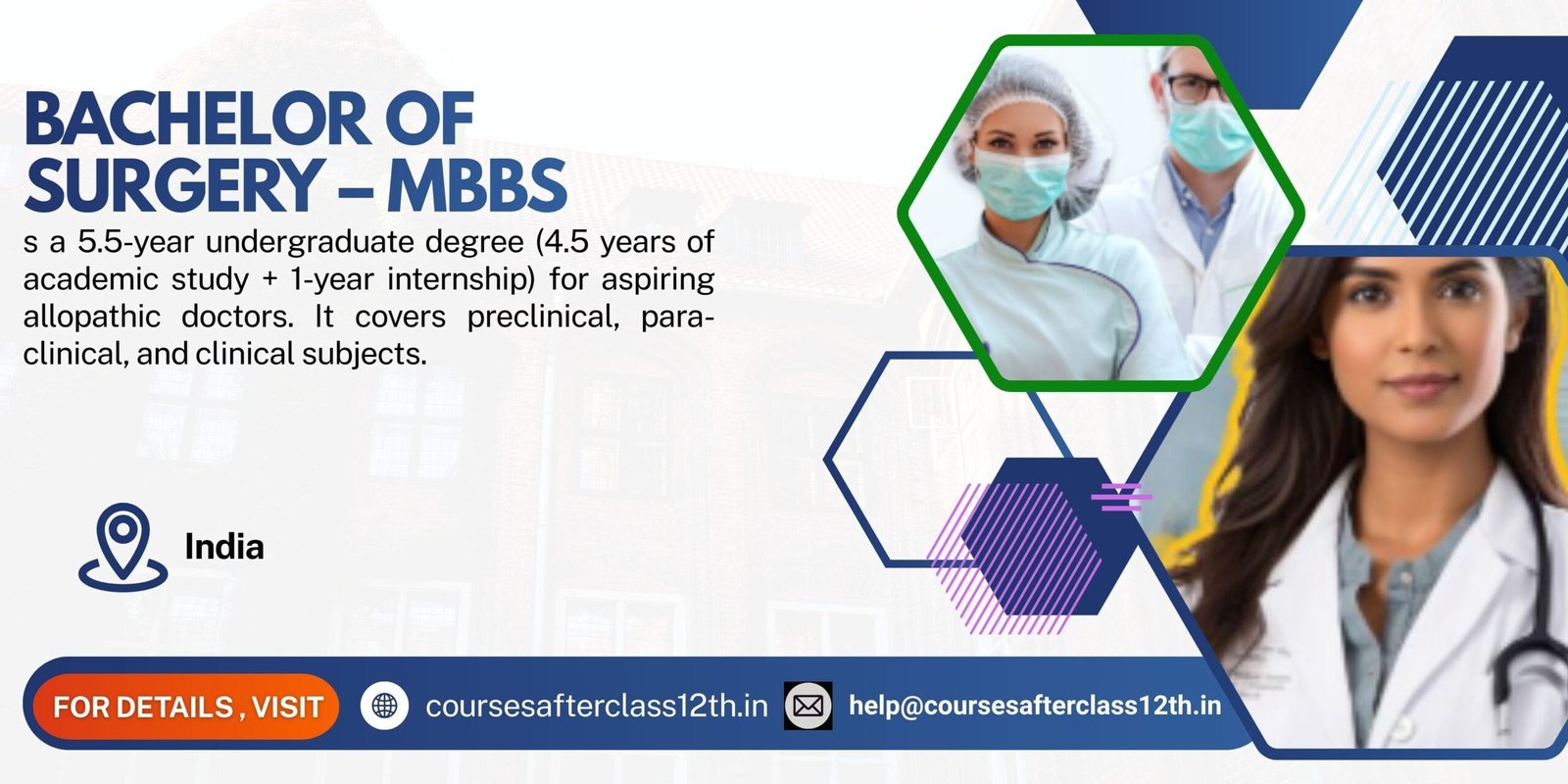
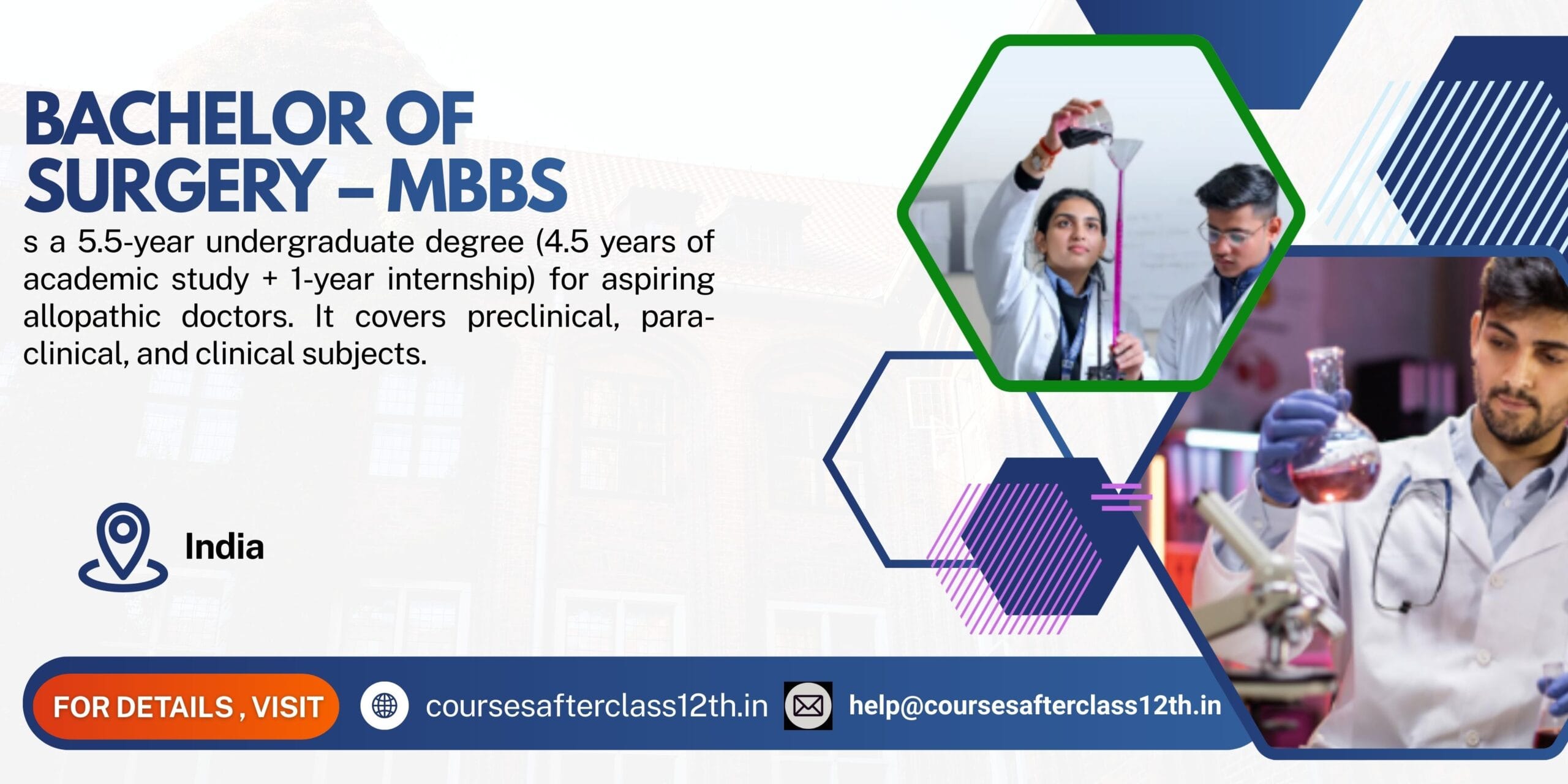
MBBS is a 5.5-year undergraduate medical program, including 4.5 years of academic education and 1 year of compulsory rotating internship. The course trains students in medical science, clinical diagnosis, patient care, and hospital-based practice.
After completing MBBS and internship, graduates are eligible for medical registration and can practice as general physicians or pursue postgraduate specialization (MD/MS).
Key Highlights of MBBS Course
| Particular | Details |
|---|---|
| Course Name | Bachelor of Medicine & Bachelor of Surgery (MBBS) |
| Course Level | Undergraduate |
| Duration | 5.5 Years (including 1-year internship) |
| Governing Body | National Medical Commission (NMC) |
| Admission Mode | Entrance Exam Based |
| Entrance Exam | NEET-UG |
| Internship | Mandatory |
| Practice License | After NMC / State Medical Council Registration |
MBBS Eligibility Criteria (India)
To be eligible for MBBS admission in India, candidates must meet the following criteria:
- Passed Class 12 (10+2) with Physics, Chemistry, and Biology
- Minimum marks:
- General Category: 50% in PCB
- SC/ST/OBC: 40% in PCB
- Minimum age: 17 years as on 31st December of admission year
- Must qualify NEET-UG
There is no upper age limit as per current guidelines.
MBBS Admission Process
Admission to MBBS in India is strictly entrance-based and regulated:
- Appear for NEET-UG
- Qualify with required cut-off percentile
- Participate in central or state-level counseling
- Seat allotment based on rank, category, and preferences
- Document verification and college reporting
Admissions are offered through:
- All India Quota (AIQ – 15%)
- State Quota (85%)
- Deemed & Private Universities
MBBS Course Structure & Subjects
Pre-Clinical Phase
- Anatomy
- Physiology
- Biochemistry
Para-Clinical Phase
- Pathology
- Pharmacology
- Microbiology
- Forensic Medicine
Clinical Phase
- Medicine
- Surgery
- Pediatrics
- Obstetrics & Gynecology
- Orthopedics
- ENT
- Ophthalmology
- Community Medicine
The curriculum focuses heavily on clinical exposure, hospital postings, and patient interaction.
MBBS Fees Structure (Indicative)
| Institution Type | Annual Fees Range |
|---|---|
| Government Medical Colleges | ₹10,000 – ₹1,00,000 |
| Private Medical Colleges | ₹8 – ₹25 Lakhs |
| Deemed Universities | ₹15 – ₹30 Lakhs |
Fees vary by state, institution, and category.
Career Scope After MBBS
After completing MBBS, graduates can pursue multiple career paths:
- General Physician (after registration)
- Postgraduate Medical Education (MD/MS)
- Diploma Courses (DNB, CPS)
- Medical Officer in Government Services
- Hospital Administration
- Medical Research
- Public Health & Healthcare Management
also opens pathways into medical education, healthcare entrepreneurship, and international medical practice (subject to licensing exams).
MBBS vs Other Medical Courses After Class 12
| Course | Duration | Focus |
|---|---|---|
| MBBS | 5.5 Years | Clinical Medicine |
| BDS | 5 Years | Dental Sciences |
| BAMS | 5.5 Years | Ayurveda |
| BHMS | 5.5 Years | Homeopathy |
| B.Sc Nursing | 4 Years | Nursing & Patient Care |
MBBS remains the most comprehensive and globally recognized medical qualification.
Who Should Choose MBBS?
MBBS is suitable for students who:
- Have strong interest in medical science and patient care
- Are prepared for long academic commitment
- Can handle high-pressure clinical environments
- Seek stable, respected, and socially impactful careers
Frequently Asked Questions (FAQ Schema–Ready)
MBBS stands for Bachelor of Medicine and Bachelor of Surgery.
Yes, NEET-UG is mandatory for MBBS admission in India.
MBBS duration is 5.5 years, including a compulsory internship.
Yes, after completing internship and medical registration, MBBS graduates can practice as doctors.
MBBS is academically and clinically demanding but manageable with consistent study and discipline.
Fresh MBBS doctors earn ₹40,000–₹80,000 per month, depending on sector and location.